
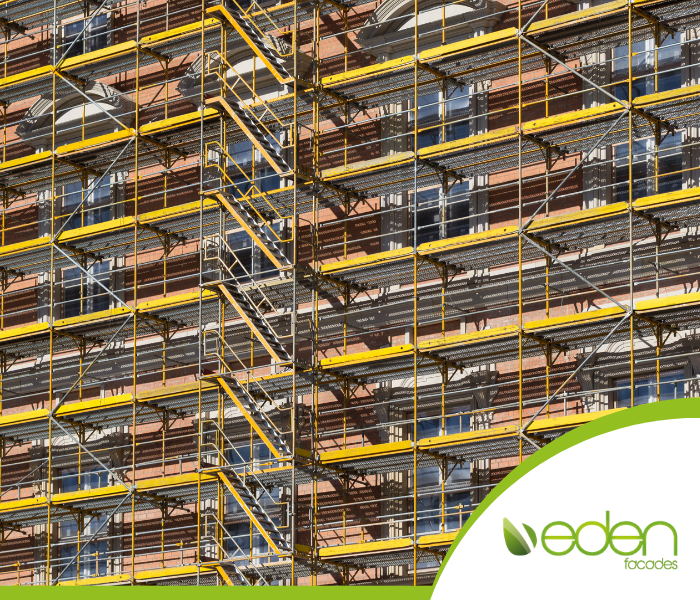
Construction volatility affects façade projects by increasing material lead times, raising costs, disrupting labour plans and placing critical programme dates at risk. Forward planning helps reduce this exposure by identifying long-lead products early, setting realistic procurement dates, coordinating design approvals and preparing for changes in price or availability.
How Construction Volatility Affects Façade Projects and Why Forward Planning Is Key
A façade package can be carefully designed and programmed but still be affected by events taking place thousands of miles away. Geopolitical conflict, changing energy prices, shipping disruption, manufacturing constraints, labour shortages and severe weather can all affect the cost and availability of façade materials.
Because façade packages rely on several specialist products, suppliers and installation stages being coordinated in the correct sequence, even a relatively small disruption can affect weatherproofing, follow-on trades and the wider construction programme.
Longer Waits for Materials
Façade projects depend on a wide range of materials, many of which are exposed to global supply-chain conditions.
Aluminium is one example. It is widely used in rainscreen panels, curtain walling, and structural components, and its production is both energy-intensive and dependent on international supply networks. When shipping routes are disrupted, vessels may need to be rerouted, increasing transit times and transport costs.
Even products manufactured in the UK often rely on internationally sourced raw materials or components. Domestic manufacture does not therefore remove exposure to disruption elsewhere in the supply chain.
The result is that a façade package’s planned lead time may face a considerably longer wait. If this is not identified early, the delayed material can move onto the critical path, preventing elevations from being completed, delaying weatherproofing and leaving follow-on trades unable to progress.
How Can Construction Volatility Increase Façade Costs?
Cost pressure is not limited to the headline price of materials. Changes in fuel and energy costs can affect manufacturing, international shipping, road transport and the operation of plant and machinery on site.
Manufacturers may introduce energy surcharges, while suppliers may reduce the period for which quotations remain valid. As a result, the price available during tender may no longer reflect the actual cost when materials need to be ordered.
For subcontractors operating on tight margins, this difference can create significant pressure later in the programme, increasing the risk of variations, delayed orders or proposed substitutions. Realistic pricing and early procurement planning are therefore essential to maintaining greater cost and delivery certainty.
According to BCIS, construction firms accounted for 16% of all insolvencies in England and Wales in June 2026, with 3,805 construction companies becoming insolvent in the 12 months to that point.
No single factor causes a business to become insolvent. However, a contractor that has priced a project unrealistically low has less capacity to absorb a material increase, delivery surcharge or reduction in productivity.
That pressure may later emerge through requests for variations, delayed orders or proposed substitutions. In the most serious cases, it can affect a contractor’s ability to complete the façade package. Any initial tender saving can quickly be outweighed by programme delays, extended site access and the cost of appointing another business to complete the work.
The Effect on Labour
Delayed materials can also affect the installation team booked to fit them.
If operatives are stood down while products remain in transit, they may be committed to another project by the time the delivery reaches site. The Project Manager may then need to reorganise access, sequencing and the work of other trades.
A façade contractor that plans labour and procurement together, rather than allocating a team against an assumed delivery date, is better placed to maintain continuity and reduce disruption.
Planning Rather Than Reacting
The projects that manage disruption most effectively are not necessarily those that respond fastest after something has gone wrong. They are generally the projects where potential risks were considered during pricing and programming.
Supply-chain risk should form part of the design and delivery strategy for a façade package, rather than being treated solely as a procurement issue once a problem emerges.
In practice, this means identifying long-lead or bespoke products during the design stage, confirming approval timelines early and pricing materials according to what they are likely to cost when purchased, rather than relying only on the price available on the day of tender.
Tony Hill, Managing Director at Eden Facades, comments:
“External factors can disrupt construction, but the greater risk is often failing to allow for those pressures when a project is priced and planned. Choosing a façade subcontractor on price alone can leave little resilience if material costs rise or lead times change.
“Contractors should work with financially sound businesses that price responsibly and have proven processes for design, procurement and delivery. At Eden Facades, we plan each package around what is genuinely required to complete it safely, correctly and in line with the programme, helping clients avoid unwelcome surprises.”
Choosing A Partner You Can Trust
No façade contractor can prevent the disruption of an international shipping route or a manufacturer experiencing capacity constraints. The value of a reliable partner lies in how effectively those risks are identified, communicated and managed before they affect the programme.
Eden Facades has many years’ experience delivering façade projects across the South East. Before installation begins, our teams review the buildability of the design, confirm supplier lead times and identify any issues that could affect delivery. Procurement is then monitored alongside design development and site progress, rather than being treated as a one-off activity at the start of the project.
Established relationships with a range of manufacturers provide earlier visibility of changing prices, product availability and production capacity. They are also particularly valuable when an original supplier is no longer able to deliver.
At Deben Fields in Felixstowe, the specified STO façade systems became unavailable when the manufacturer entered liquidation in the UK just one month before works were due to begin.
Working with Kier Construction and the wider design team, Eden Facades sourced and secured approval for a compliant alternative using Benx systems. This maintained the original design intent and minimised disruption to the programme.
This is an important part of supply chain resilience: it requires the technical knowledge and industry relationships to identify, assess and gain approval for a suitable alternative when circumstances change.
Early communication is equally important. A main contractor needs sufficient time to review the available options, obtain approvals and adjust sequencing where necessary. They should not first become aware of a procurement issue when a delivery fails to arrive.
The right façade partner provides value through responsible pricing, early planning and proactive supply-chain management can reduce the need for intervention and provide greater confidence that the package will be delivered safely, correctly and in line with the wider programme.
If you are looking for a reliable façade subcontractor and want to reduce procurement, programme and supply-chain risk, get in touch with Eden Facades.